5. Supportive Use of Props
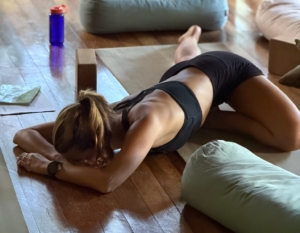
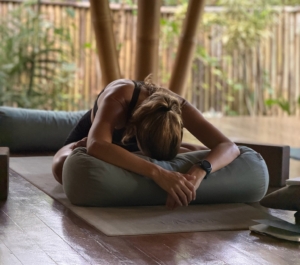
Mindful Yin Yoga incorporates props such as blankets, bolsters, blocks, and straps to support the body in each posture. These tools create a safe and supportive environment, allowing you to soften into the shape without unnecessary strain.
Props also allow each posture to be adapted to individual needs, making the practice accessible while encouraging deeper relaxation — an approach we emphasise within a Yin Yoga teacher training in Bali, where safety and awareness are key.
6. Cultivating Patience and Acceptance
The longer holds in Yin Yoga can bring sensations of discomfort or resistance. Rather than reacting or trying to change the experience, Mindful Yin Yoga encourages you to meet these sensations with patience.
By allowing sensations and emotions to arise and pass naturally, the practice develops a more compassionate and non-judgmental relationship with the body and mind.
7. Integration of Body, Mind, and Breath
The breath acts as a bridge between the body and mind. In Mindful Yin Yoga, attention is often anchored to the breath, helping to regulate the nervous system and deepen awareness of internal sensation.
This connection supports a more grounded and steady experience, allowing both physical and mental tension to gradually soften.
8. Present-Moment Awareness
A key aspect of Mindful Yin Yoga is the cultivation of present-moment awareness. Attention is directed toward the sensations, thoughts, and emotions that arise during the practice, without needing to change or control them.
This awareness allows for a deeper connection to the experience of the body, rather than becoming distracted by expectation or outcome.