Physical Dimension of Yin Yoga

Yin Yoga draws from both Hatha Yoga and Taoist philosophy, offering a contemplative approach to physical and energetic well-being. In Taoism, Yin and Yang describe complementary qualities of energy: Yin is receptive, inward, and cooling, while Yang is active, outward, and warming. Yin Yoga explores these qualities through stillness, time, and receptivity in practice.
The practice primarily targets deeper connective tissues such as ligaments, tendons, and fascia through prolonged, passive postures. These shapes are traditionally associated with the meridian pathways described in Chinese Medicine, which are closely related to the fascial network of the body and its capacity to transmit sensation and movement.
Through sustained loading and release, Yin Yoga may support hydration and adaptability within the fascial tissues, helping to maintain elasticity and functional resilience over time. This approach can contribute to joint health and mobility by encouraging tissue responsiveness rather than muscular effort.
Beyond the physical body, Yin Yoga offers a counterbalance to habitual stress and constant activity. By emphasising stillness and slow sensory awareness, the practice supports nervous system regulation and encourages a shift toward parasympathetic response, creating conditions for rest, recovery, and mental clarity.
Emotional Release through Yin Yoga
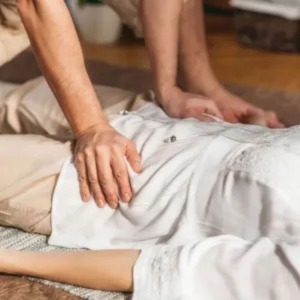
Yin Yoga creates a quiet space in which emotional experience can become more noticeable. Through stillness and time, the practice often brings awareness to feelings that may be less accessible in more dynamic forms of movement. Emotions such as sadness, frustration, or vulnerability can arise as attention turns inward.
The long-held, meditative nature of Yin Yoga provides a supportive environment for observing these experiences without urgency or force. Rather than seeking to change or resolve what arises, the practice encourages presence and gentle acknowledgement.
By learning to stay with emotional sensations as they appear, practitioners cultivate the capacity to meet their inner experience with less judgment and reactivity. Over time, this approach can support emotional resilience, self-awareness, and a more compassionate relationship with one’s inner landscape.
Mental Dimensions of Yin Yoga

In a fast-paced world shaped by constant stimulation, moments of stillness are increasingly rare. Yin Yoga offers a deliberate pause, inviting attention to turn inward. As postures are held for extended periods, practitioners are given the opportunity to notice thoughts as they arise, without immediately engaging with them.
This quality of sustained stillness supports mindfulness and present-moment awareness. Rather than trying to control the mind, Yin Yoga encourages observation — noticing where attention moves, how it reacts to sensation, and when habitual patterns appear. Over time, this practice can help reduce identification with mental activity and create space between thought and response.
The longer holds characteristic of Yin Yoga allow practitioners to become more familiar with their internal dialogue, mental habits, and conditioned responses. Through this process of self-observation, greater clarity and discernment can develop, supporting more conscious and considered responses both on and off the mat.
Like all yoga styles, we must remember that Yin is a tool that requires a level of inner commitment, & self-compassion. Remember our practice is a journey.
Energetic Flow in Yin Yoga
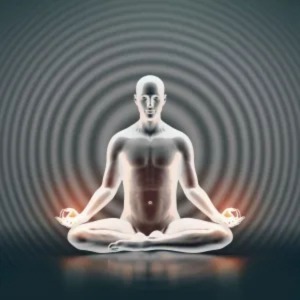
Within the framework of Chinese Medicine, emotional experience and energetic activity are understood as closely related aspects of human functioning. Emotional strain can influence the movement of Qi, just as disruptions in energetic flow may be reflected in mood, sensitivity, or internal tension. Yin Yoga draws on this perspective by working with stillness, time, and specific areas of the body traditionally associated with meridian pathways.
Through prolonged, passive postures, Yin Yoga places gentle stress on the fascial tissues that correspond to these energetic pathways. From a Chinese Medicine viewpoint, this approach is intended to support the free movement of Qi and encourage balance within the organ systems, rather than forcing release or change.
By cultivating awareness of sensation and energetic quality during practice, Yin Yoga invites practitioners to experience the body as an interconnected system. Over time, this can foster a greater sense of internal coherence, supporting vitality, emotional steadiness, and a more attuned relationship with one’s internal rhythms.
Spirituality in Yin Yoga
Within the quiet stillness of Yin Yoga, attention often shifts beyond physical sensation and emotional response toward more subtle aspects of experience. With fewer external demands, practitioners may become aware of moments of spaciousness, presence, or inner listening that are less accessible in more active forms of practice.
Yin Yoga supports self-inquiry by creating conditions for observation rather than analysis. The extended holds invite reflection, not through seeking answers, but through noticing what arises when effort is reduced and attention is sustained. In this way, the practice can encourage a deeper relationship with awareness itself.
As sensitivity to internal experience develops, practitioners may also begin to perceive a sense of interconnectedness — between breath, body, environment, and moment. This subtle dimension of Yin Yoga is not defined by belief or interpretation, but by direct experience, offering a quiet reminder of relationship rather than separation.
In this way, Yin yoga invites you to not only unite with your inner Self but also to recognize your interconnectedness with all of existence.
If this exploration of the five dimensions of Yin Yoga resonates, further study can offer a more structured and embodied understanding of these principles. Our 200-hour Vinyasa & Yin Yoga Teacher Training, 100-hour and 50-hour Yin Yoga Teacher Trainings on Nusa Lembongan, Bali all provide an in-depth framework for working with Yin Yoga as a multidimensional practice.
The training explores physical, energetic, mental, emotional, and subtle aspects of Yin Yoga alongside foundational Chinese Medicine theory, meridian pathways, and functional anatomy. Through daily practice, asana labs, and guided inquiry, students are supported in developing clarity, confidence, and depth in both personal practice and teaching.