
Functional Yoga for the Spine: Movement, Mobility and Spinal Health

The spine plays a central role in movement, posture, stability, and overall function throughout the body. In Functional Yoga, spinal movement is approached through the understanding that every spine is different, and that mobility, flexibility, and posture are influenced by anatomy, fascia, connective tissue, lifestyle, and movement patterns.

Rather than forcing the spine into idealised yoga shapes, Functional Yoga encourages a more adaptable and individualised approach to spinal movement. As a result, practitioners learn to work with their structure, mobility, and nervous system responses rather than against them.

Understanding Functional Yoga for the spine helps create a more sustainable relationship with movement, spinal mobility, posture, and long-term body awareness.

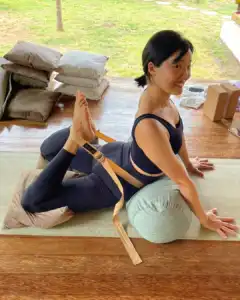
Understanding the Spine in Functional Yoga

Functional Yoga for the Spine: Mobility, Fascia and Spinal Health

The spine is designed to provide both stability and movement.

It supports:

  • flexion (forward bending)
  • extension (backbending)
  • rotation (twisting)
  • lateral movement (side bending)
  • postural support and load distribution

However, spinal movement varies significantly between individuals due to factors such as:

  • vertebral shape
  • posture and habitual movement patterns
  • fascia and connective tissue
  • muscular tension
  • previous injuries
  • age and mobility

Functional Yoga recognises these differences and encourages practitioners to move according to their own structure and range of motion.

Functional Yoga and Spinal Mobility

Spinal mobility involves more than flexibility alone.

Healthy movement within the spine depends on the relationship between mobility, stability, muscular support, fascia, breath, and nervous system regulation. Some areas of the spine naturally move more freely, while others prioritise stability and support.

In modern life, long periods of sitting, repetitive posture, stress, and reduced movement variability may contribute to tension and restricted movement patterns throughout the spine.

As a result, Functional Yoga often focuses on restoring gradual movement awareness rather than aggressively forcing flexibility.

Fascia, Connective Tissue and the Spine

Fascia and connective tissue play an important role in spinal movement and posture.

Fascia forms a continuous interconnected network surrounding muscles, joints, ligaments, and spinal structures throughout the body. Because of this, tension within the spine may also relate to surrounding movement systems including the hips, shoulders, pelvis, and rib cage.

Through mindful movement, sustained postures, spinal mobility exercises, and body awareness, Functional Yoga may help improve movement adaptability, posture, mobility, and how connective tissue responds to stress over time.

This perspective encourages practitioners to understand the spine as part of an integrated movement system rather than an isolated structure.

Functional Yoga and Spinal Flexibility

Functional Yoga approaches spinal flexibility differently from appearance-based yoga systems.

Rather than trying to achieve extreme backbends or deep forward folds, the emphasis is placed on:

  • sustainable movement
  • body awareness
  • gradual adaptation
  • spinal stability and support
  • healthy range of motion
  • nervous system regulation

As a result, practitioners are encouraged to explore movement with awareness rather than forcing the spine beyond comfortable limits.

The Nervous System and Spinal Tension

The nervous system strongly influences how the spine responds to movement, posture, and stress.

In modern environments filled with constant stimulation, stress, and prolonged sitting, many people develop patterns of muscular guarding and tension throughout the neck, shoulders, lower back, and surrounding connective tissue.

Functional Yoga uses breath awareness, slower movement, mobility work, and mindful loading to help reduce unnecessary tension while supporting relaxation and movement efficiency.

Over time, this may help practitioners develop greater awareness of how stress and posture influence spinal movement and comfort.

Functional Yoga, Yin Yoga and the Spine

Functional Yoga for Healthy Spine Movement and Connective Tissue

Functional Yoga principles are closely connected to Yin Yoga, especially when working with the spine and connective tissue.

In Yin Yoga, sustained postures and reduced muscular effort create gentle stress within fascia and deeper connective tissue structures. At the same time, practitioners are encouraged to adapt postures according to individual anatomy and spinal variation rather than external appearance.

Together, Functional Yoga and Yin Yoga support movement awareness, mobility, fascia health, and nervous system regulation through a more individualised approach to practice.

Why Functional Yoga for the Spine Matters

Understanding Functional Yoga for the spine helps explain:

  • why spinal mobility varies between individuals
  • how posture and lifestyle affect movement
  • the relationship between fascia and spinal tension
  • why flexibility alone does not define spinal health
  • how awareness and adaptability support long-term movement

Rather than chasing idealised yoga shapes, Functional Yoga encourages a more sustainable and anatomy-informed understanding of spinal movement and wellbeing.

Explore Yin Yoga Philosophy More Deeply

If you want to explore Functional Yoga, fascia, Yin Yoga, anatomy, and movement principles more deeply, our 200 Hour Yoga Teacher Training and 100/50 Hour Yin Yoga and Chinese Medicine teacher trainings in Bali explore these principles in depth.

These teachings help students develop a more informed and adaptable understanding of yoga beyond external shapes alone.

Frequently Asked Questions

What is Functional Yoga for the spine?

Functional Yoga for the spine focuses on movement, mobility, posture, fascia, and anatomy rather than forcing idealised spinal shapes.

Can Functional Yoga improve spinal mobility?

Functional Yoga may help support movement awareness, posture, mobility, and how connective tissue responds to stress over time.

How does fascia affect the spine?

Fascia surrounds and connects spinal structures throughout the body, influencing movement, tension, posture, and mobility.

Why does stress create spinal tension?

Stress and nervous system activation may contribute to muscular guarding and tension throughout the spine and surrounding connective tissue.

Contact Akirayoga with any Questions:

    © 2026 Akira Yoga – akirayoga.com